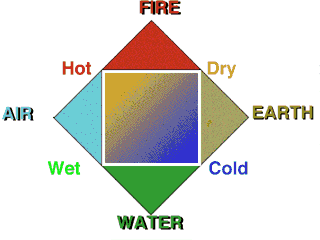
Aristotle, the famous Greek philosopher and tutor of Alexander the Great, had an alternate theory of what comprised matter. He believed that all matter was made of four natural elements: fire, earth, air, and water. Each of these elements has properties that it also shares with other elements. For example, water is both wet and cold. It shares the property of "cold" with the element earth. It shares the property of "wet" with the air. According to Aristotle, the element water is able to transform into either the element air or earth due to these similar properties.
Matter is comprised of different combinations of these four elements. The element earth was deemed the heaviest, so the heaviest substances known at the time, such as iron, were believed to contain more earth and less of the other elements. Due to his clout, this theory permeated through the beliefs of people up through the Dark Ages.